


Ultimate packing list
Travel essentials for your adventure
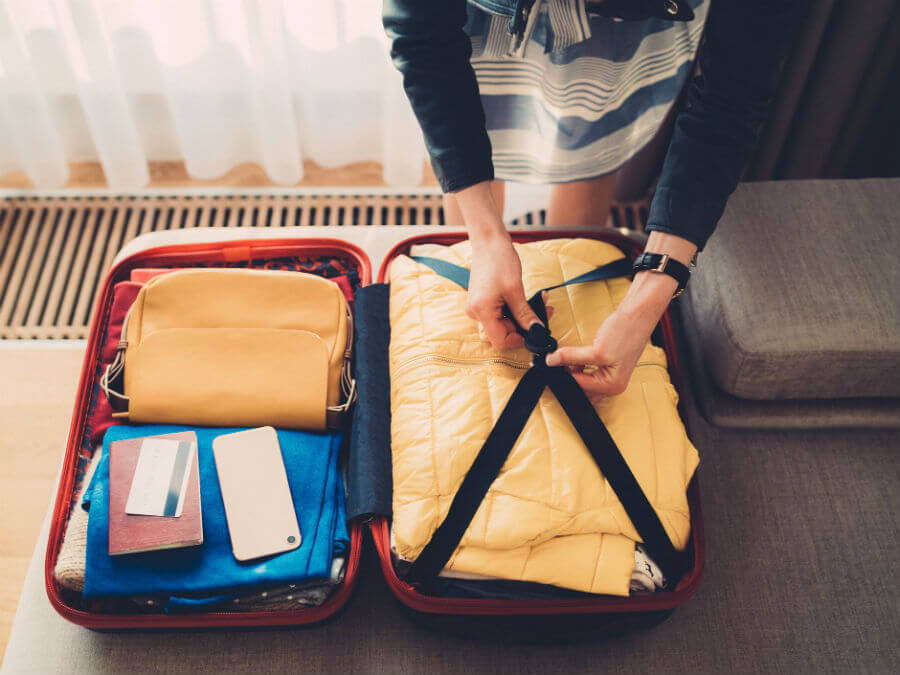
Whether it’s packing too little, packing too much, forgetting the swimsuit or even the passport, most of us are guilty of a few baggage bloopers. If you’re a seasoned traveller, chances are you’ll have your packing down to a fine art (although, even the pros can make mistakes).
If it’s your first time travelling or if you’re packing for the whole family, then a travel packing list like this can go a long way to help.
We’ve divided this ultimate packing list into sections, so you can organise your luggage with confidence, prepare your travel documents and enjoy a relaxing and stress-free holiday. Use it as a vacation packing list you can come back to before every trip, adjusting the items based on your destination, the length of your stay and the type of adventures you have planned.
Before you pack: plan your trip
A bit of planning before you start packing will save you space, weight and stress. Build a rough itinerary first, flights, accommodation, day trips, dinner reservations, any activities that need specific gear, and the right packing list usually writes itself from there.
Knowing the weather forecast, the cultural norms at your destination and the activities you’ll do each day means you can pack with intent rather than throwing in everything you own "just in case."
A few quick things worth doing before you open a suitcase:
- Check the weather forecast for your destination across the dates you’ll be there.
- Confirm your visa and passport requirements on smartraveller.gov.au.
- Print or save your itinerary, booking confirmations and tickets in one place, a single travel wallet or a folder on your phone makes the airport much easier.
- Consider purchasing travel insurance early, before packing valuables, so your policy may be in place while you’re carrying higher‑value items, subject to the policy terms, conditions, and exclusions.
Travel packing tips
Well-packed bags don’t happen straight away. Before throwing anything and everything into the old suitcase in the corner, consider the following steps.
Choose the right luggage
When it comes to travelling in comfort and security, not any old bag will do. Here are six quick tips for preparing the perfect bag for your adventure:
- For your checked luggage, find a sturdy suitcase with durable zips and wheels. Flashy designer suitcases may look great but can attract unwanted attention from thieves.
- For your cabin luggage, find a lightweight bag with a hard surface to protect it in the overhead compartment. Remember that there are strict laws around what you can pack in cabin luggage.
- If you’ll be using this as your day bag while out and about, consider finding a theft-proof bag with slash-proof material, hidden compartments and locking zips. A small daypack or backpack is often more practical than a handbag for sightseeing, particularly if you’re hiking or visiting busy markets.
- If you’re an adventure traveller, an all-in-one travel backpack can be a versatile option and save you from grappling with a wheeled bag in more rugged terrain. Look for breathable, flexible, weather-resistant and durable options. Remember, you get what you pay for.
- As many well-seasoned travellers know, using packing cubes to compartmentalise your luggage is a great way to save space and keep things tidy.
- Quality travel insurance is the best way to truly protect your belongings. With our International Comprehensive policy, you can pack with confidence knowing your valuables are protected against loss, damage and theft.
Checked vs carry-on luggage
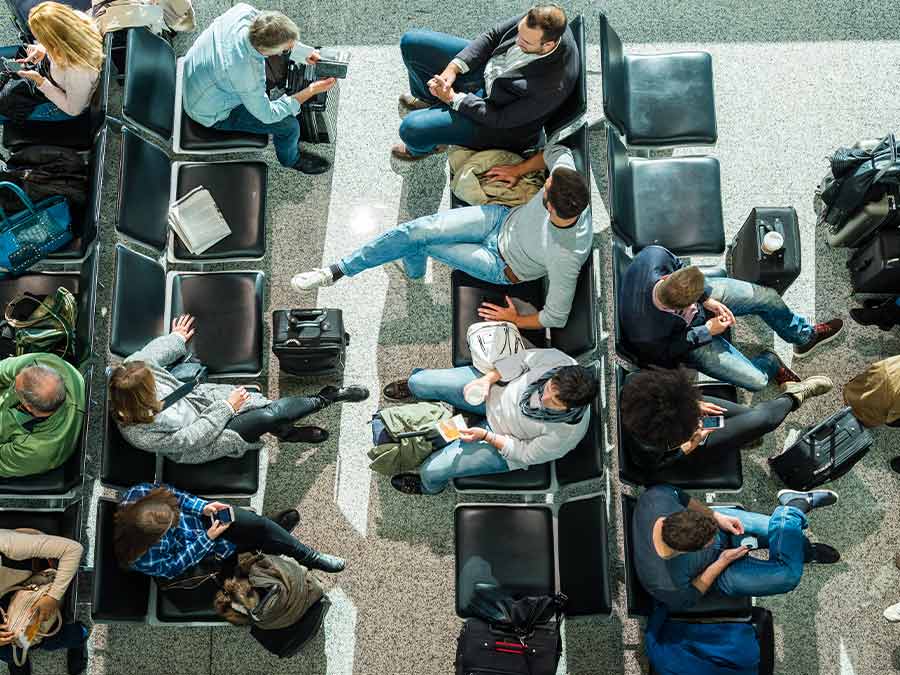
It’s important to know the rules surrounding checked and cabin luggage before you start packing. There are strict laws on what you can pack in cabin luggage, which can even differ from airline to airline. As a general guide, the following items can’t be taken in your carry-on bags:
- Sharp objects (such as razor blades, scissors, and knives)
- Objects potentially used as a weapon (such as hammers, cricket bats and golf clubs)
- Flammable goods (such as aerosol containers and lighters)
- Liquids exceeding a certain volume
- Some food and drink.
Always check with your airline for an exhaustive list of what can and can’t be taken on board, and if in doubt, leave it out. Travellers connecting through the United States should also check current TSA rules, which can be stricter than other airlines on certain items.
Pack your valuables in carry-on luggage
While it’s important to adhere to the airline’s rules on checked and carry-on bags, it’s also important to remember that your travel insurance also determines where you pack your valuables.
Many travel insurance policies won’t cover your valuables if they’re damaged or lost while in checked luggage. For this reason, you should pack high-value items like electronics and jewellery in your carry-on bags. It’s best to carry cameras, laptops, tablets, headphones, lenses and other high‑value items in your hand luggage, as checked baggage can be damaged. Any insurance cover is subject to the policy terms, conditions, and exclusions.
Overseas travel packing checklist
Now that you’ve got the right luggage, the right technique and know the difference between checked and carry-on bags, it’s time to start packing. We’ve divided this travel packing list into sections and included a few insider tips along the way.
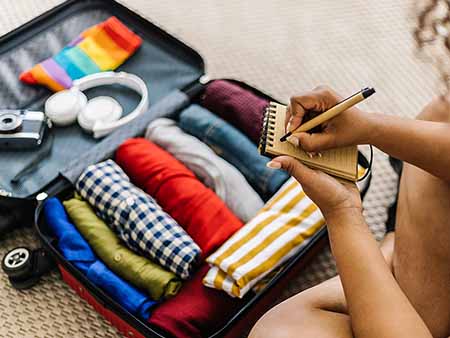
Clothes to pack
Clothes suitable for climate and culture
Before emptying the wardrobe into your suitcase, ask yourself if the clothes are suitable for your destination. Three pairs of jeans may be overkill for your Fijian adventure and revealing swimwear may not be appropriate in conservative countries.
Research your destination’s climate, cultural norms and customs before you start packing.
Clothes and accessories for day-to-day
- T-shirts
- Casual shirts
- Vest tops
- Jackets
- Jumpers
- Dresses
- Skirts
- Jeans
- Shorts
- Pants
- Belt
- Comfortable everyday shoes
- Underwear
- Sleepwear
- Socks
- Hat
- Prescription glasses and case.
Clothes and accessories for the beach
- Sunscreen/zinc for the face and body
- Sun hat
- Swimwear/cover-up
- Sunglasses and case
- Wet bag
- Beach bag
- Thongs or sandals
- Beach towel
- Wetsuit/rash top.
Tip: Some sunscreens contain ingredients that are damaging to coral reefs. In fact, Hawaii has banned sunscreens containing oxybenzone and octinoxate; two damaging chemicals commonly found in sunscreen. If in doubt, buy your sunscreen at your destination rather than bringing your own.
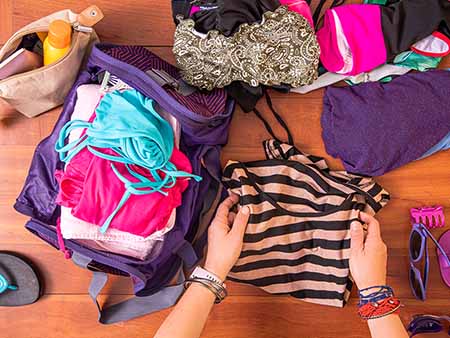
Clothes and accessories for cool weather
- Rain jacket/coat
- Travel umbrella
- Windbreaker
- Hat
- Scarf
- Gloves
- Snow/rain boots
- Winter sports gear.
Clothes and accessories for adventure travel
- Sturdy enclosed shoes
- Loose-fitting long-sleeved t-shirt
- Quick-drying shirt and shorts
- Waterproof socks
- Mosquito net
- Thermal gear for cold climates.
Clothes and accessories for eating out
- Dress pants
- Nice shoes
- Button-up shirt
- Formal dress
- Coat
- Purse/wallet
- Handbag
- Jewellery (if valuable, wear it on the plane).
Toiletries to pack
You may even get away with leaving the basics like shampoo, conditioner and toothpaste at home if you’re checking into a well-stocked hotel!
- Dental products (toothbrush, toothpaste, mouthwash, floss etc.)
- Deodorant
- Make-up
- Aftershave/perfume
- Shampoo/conditioner
- Body wash/soap
- Cleanser, toner, moisturiser
- Cotton wool
- Lip balm (handy for the plane)
- Feminine hygiene products
- Contact lenses and solution
- Shaving gear
- Hair styling tools and products
- Emergency toilet roll
- Nail clippers, tweezers, scissors
- Laundry kit.
Health & medication to pack
Staying fit and healthy overseas should be a top priority for all travellers. Whether you have important prescription medications or simply want an effective first-aid kit for your adventure, health and medication items form an important part of your travel packing list.
- Prescription medication
- First aid kit
- Cold and flu medicine
- Pain relief medicine
- Diarrhea medicine
- Motion sickness tablets
- Sunburn gel (such as aloe vera)
- Vitamins
- Insect repellent
- Eye drops
- Hand sanitiser.
Tip: There are strict rules on travelling with prescription medication, like carrying it in its original packaging accompanied by a doctor’s certificate. Check with your airline before packing your bags. Always check smartraveller.gov.au and follow their vaccination recommendations.
Electronics to pack
From booking hotels on the go to travelling with thousands of books in a single small device, technology has made travelling easier than ever before. Don’t forget the following items to enrich your trip:
- Mobile device and charger
- Laptop/tablet and chargers
- Camera, memory card and charger
- Protective cases
- Local power adaptor for your destination
- Noise cancelling headphones
- eReader and charger
- GoPro
- Travel apps downloaded to your device (such as language guides)
- Universal power adapter (saves carrying multiple country-specific adapters)
- Portable battery pack for charging on the go. These should be carried in hand luggage. Airline rules around power banks vary and may restrict or prohibit them in checked baggage, so check your airline’s safety requirements before travel.
- Travel tripod (if you’re into photography)
- International SIM card or eSIM for data on arrival
Tip: Pack your electronics in your carry-on bag, as we cannot cover these items if they are damaged or lost in your checked luggage. One small organising habit that pays off: keep all your chargers, cables, adapters and small accessories in a single zipped pouch so you’re never digging through your suitcase for a charger at midnight.
For a full breakdown of options for staying connected overseas, including local SIM versus eSIM versus international roaming, see our guide to international SIM cards.
Travel documents
Imagine landing at a foreign airport and noticing that every other passenger on your flight is holding a printed visa that you didn’t know you needed. Getting your documents in order is a critical step of your travel planning, so don’t forget these essentials:
- Passport and photocopies
- Local and international driver's license
- Cash and credit cards
- Travel insurance documents
- Visas (if applicable - always check entry requirements on Smartraveller well before your departure date)
- Booking confirmations and itineraries (accommodation, tours, rentals, transport etc.)
- International SIM card
- Emergency contacts list
- Embassy contacts list
Tip: Many countries require that your passport is valid for at least six months after your intended return date. Ensure you research this 'six month rule’ on smartraveller.gov.au to avoid unwanted surprises at immigration.
Keeping photocopies of your travel documents lets you protect the real thing and acts as a backup if something is lost. It’s also a good idea to upload these photocopies to a secure online storage service, like Google Drive. Two physical copies and one digital copy is a sensible standard, keep one set in your day bag, one in your suitcase, and the digital copies accessible from any device with your login details.
Safety and security
- Luggage lock
- Money belt.
- RFID-blocking wallet for your credit cards and passport
- Padlock or cable lock for hostel lockers and zips
- Door wedge alarm for accommodation that doesn’t feel secure
Petty theft is one of the most common issues travellers run into overseas. A money belt worn under your clothes, an RFID-blocking wallet, and the habit of keeping copies of your cards separate from the originals will go a long way. For more on staying ahead of street-level theft, see our guide on how to outsmart pickpockets.
Other things to do before you travel
As romantic as it seems, travelling is rarely just “get up and go.” The following checklist items are essential before boarding the plane:
- Inform your bank of your travel plans
- Exchange currency
- Register your travel with smartraveller.gov.au
- Share your travel plans with friends and family
- Pre-pay any bills that will arrive while travelling, where possible
- Secure your house and unplug appliances
- Have a neighbour or relative collect your mail (an overflowing letterbox is an invitation for thieves)
- Stop any regular deliveries while you’re away (such as newspapers or food boxes)
- Check-in for your flight online
- Plan how you’ll get to the airport (check what terminal you need to go to).
Tip: Events such as volcanic eruptions and snow storms can be unpredictable. That’s why it’s important to visit smartraveller.gov.au just before your trip. Search for your destination to see the latest travel advice and safety tips. A ‘do not travel’ or ‘reconsider your need to travel’ advice level may mean you have to delay or cancel your travel plans.
Finding the best travel insurance
Comprehensive travel insurance is one of the most important things to pack for any holiday. Whether you’re embarking on a round-the-world backpacking adventure, or taking the kids overseas for the school holidays, it’s important that you’re protected if the unexpected happens.
Frequently asked questions
How do I avoid overpacking?
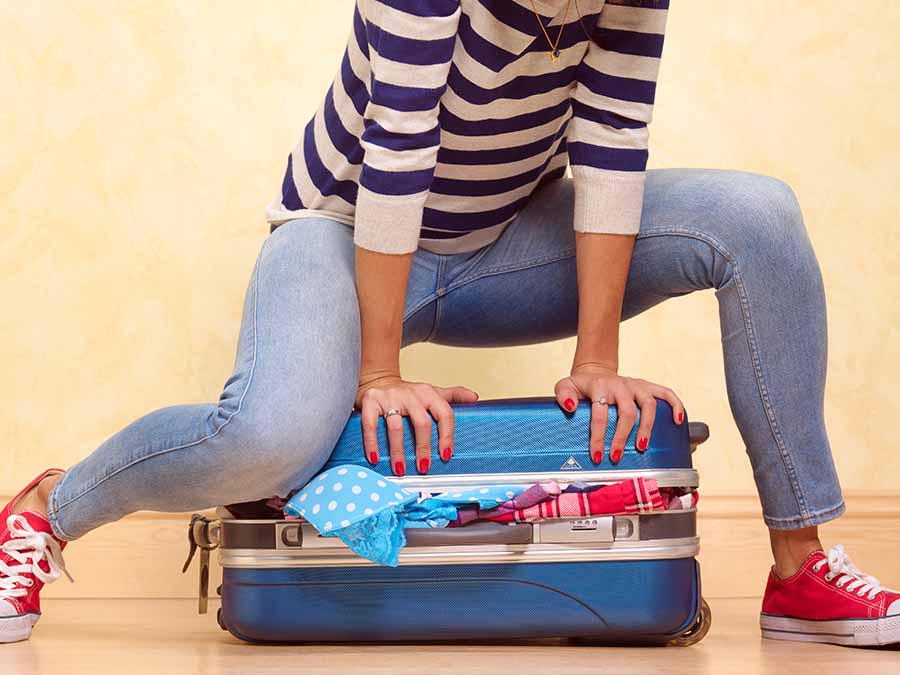
Lay everything out before you pack, then put a third of it back. Most travellers wear the same handful of favourites on rotation and leave the rest untouched. Stick to a colour palette that mixes and matches, plan one outfit per day plus two spares, and remember that toiletries and basics can usually be bought at your destination if you forget something.
Is it better to roll or fold your clothes when travelling?
Roll for casual items (t-shirts, jeans, activewear, underwear), it saves significant space and reduces creasing. Fold structured items like dress shirts, blazers and formal dresses to keep their shape. Most seasoned travellers do both and use packing cubes to keep rolled and folded items separated.
What is the most forgotten thing to pack?
Universal power adapters top almost every "most forgotten" list, followed by phone chargers, prescription medications and a copy of travel insurance documents. The fix is a final pre-departure checklist taped to your fridge or saved in your phone, run through it the night before you fly.
Do phone chargers go in hand luggage or a suitcase?
Hand luggage. Phone chargers, laptop chargers and devices with lithium batteries (including power banks) are generally required to be carried in hand luggage under airline safety rules. Requirements can vary by airline, so always check before you travel.
The content of this article is general and provided for information purposes only. Southern Cross Travel Insurance (SCTI) doesn’t guarantee or warrant the accuracy, completeness or currency of any article, and the information should not be relied on as a substitute for independent advice or personal judgment.
This article may contain hyperlinks to other websites owned or operated by third parties, or references to third party products or services. SCTI isn’t responsible for, and makes no recommendation about, the content or accuracy of any third party website, or for the suitability or performance of any product or service. The inclusion of a link in this article doesn’t imply that SCTI endorses the website or third party product/service.