


How to compare travel insurance
When it comes to something as important as travel insurance, you should be confident in the coverage you choose. But not all policies offer the same level of cover, options, or support, and a clear comparison is the best way to find a suitable travel insurance policy that meets your needs.
This guide explains the best way to compare travel insurance, outlines key coverage options, and answers common questions so every person, family, and traveller can choose with confidence. It applies whether you are travelling within Australia or exploring the world.
What is travel insurance?
Travel insurance is a contract between you and an insurance provider. In exchange for a premium, the insurer agrees to provide cover for certain unexpected events that may occur before or during your trip (for example, lost luggage or a medical emergency overseas). Cover is only provided when a claim meets the policy’s terms, conditions, limits, and exclusions. This means you must take reasonable care and comply with policy requirements (for example, not leaving luggage unattended).
Travel insurance can cover a range of unexpected events like medical emergencies, theft or loss of belongings, natural disasters and trip cancellation or disruption. Each type of cover has its own maximum payable amount, known as a benefit limit, and different events or types of loss may have different limits and conditions.
Why buy travel insurance?
From slips and trips to lost luggage, none of us are immune to unexpected events taking place when we're travelling. These unexpected events can end up costing you lots of money, especially if you’re travelling by plane, or you're travelling overseas and has expensive medical care.
Travel insurance offers peace of mind, knowing your experience is supported by financial protection if plans change or emergencies occur. This is especially important for children, family travel, or complex trips.

Things covered by travel insurance
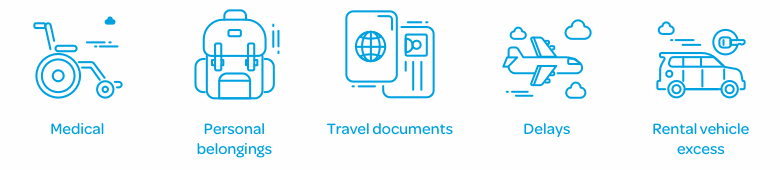
Different travel insurance options provide different levels of coverage. Our International Comprehensive policy may include cover for:
- Medical and evacuation
- Trip cancellation or changing your journey before you leave
- Lost, damaged or stolen items, due to certain insured events such as theft
- Bank cards, passport and travel documents
- Personal accident
- Personal liability
- Rental vehicle excess
- Cash allowance while in hospital
- Emergency dental treatment
- Overseas funeral expenses
- Changes to your journey once you have left
Some insurers may also offer policies that focus only on providing cover for medical expenses for your overseas adventure. For example, our International Medical Only policy covers you for medical and evacuation and personal liability such as:
- Medical treatment
- Doctors' visits
- Prescribed medication
- Specialist treatment
- Medical transport costs
- 24 hour emergency assistance.
This type of travel insurance policy suits travellers who want essential protection without broader benefits.
Staying local?
Domestic travel insurance provides cover when you're travelling in Australia, whether it’s for a weekend city break or a month-long road trip to see the sights. Domestic insurance can provide cover for things like:
- Trip cancellation or changing your journey before you leave
- Lost, damaged or stolen items, due to certain insured events such as theft
- Rental vehicle excess
- Cover for your pets or booked childcare if your plans change
- Personal accidents and liability
Working overseas or taking more than one trip?
Everyone travels differently and you may have some requirements that are different to a standard international policy. If you’re planning to work overseas or you know you’ll be taking many trips within a year, the cover you need may be different, so it's important to find a policy that suits your needs. Our Working Overseas or Annual Multi-trip policies provide flexible options designed to match these travel styles.
How to compare travel insurance benefits
When you’re comparing travel insurance policies, it’s important to compare the benefit limits, sub-limits, excess and terms outlined in each benefit type. You can find this information in the insurer's product disclosure statement. This will help you to learn:
- What benefits you're covered for (e.g. medical expenses)
- The limits and any sublimits that apply to each benefit (e.g. how much you can claim up to)
- Any conditions or eligibility requirements that you need to meet in order to be able to submit a claim
- Any exclusions that apply to the cover.
These details help you understand how a policy helps to protect you in real events.
What isn’t covered by travel insurance?
When comparing travel insurance policies, it’s important to take note of any exclusions to your cover. Travel insurers usually outline a list of general exclusions in their policy documents.
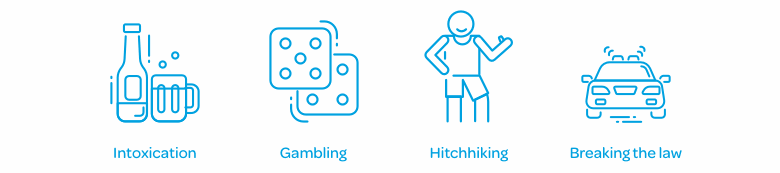
For example, amongst other exclusions, you may not be covered if you’re:
- Breaking the law of the country that you're visiting
- Under the influence of alcohol or drugs
- Gambling
- Hitch-hiking
Travel insurance for activities
There are some activities that an insurer may be reluctant to provide cover for altogether, or there may be conditions that apply when you're taking part in more high risk activities. Reading your policy wording will help you to know how you're covered in all of these instances.
Comparing different types of travel insurers
During your research, you may come across different types of organisations that sell travel insurance. Let’s look at some of the most common types of travel insurance providers and some things to consider for each.
A key thing to note is that most insurers offer a ‘free look period’ which is a set period of time after purchasing your policy within which you can cancel your policy without any financial penalty, subject to the policy wordings. You may be able to amend or cancel your policy any time before leaving home on your travels, but you may incur a cost to do so.

1. Direct travel insurance
Direct travel insurers, like us, sell travel insurance directly to customers, without any middlemen. Southern Cross Travel Insurance is proud to be a direct travel insurer. This allows us to focus on what we do best — travel insurance.
We underwrite our own policies, which means the same team you buy your policy from is also responsible for assessing and paying claims. There’s no hand‑off to a third party for claims assessments.
2. Credit card travel insurance
Some credit card providers may offer ‘complimentary’ travel insurance. However, it’s always important to check the benefits, cover limits and exclusions, so you have a full understanding of what you are and aren’t covered for.
You may be required to activate your travel insurance before you travel to ensure you’re covered. There may also be other rules that you have to follow to ensure you are covered, such as paying for your travel costs on that credit card.
3. Through travel agents
Travel agents may offer to organise your travel insurance by dealing with an insurer themselves. This may seem convenient, especially if you're purchasing it at the same time as a holiday that you've purchased through the agent. However, you may still want to consider doing some homework by understanding who is providing or underwriting the cover and reading customer reviews, looking at the Product Disclosure Statement (PDS) and comparing prices with other competitors to ensure you get the best value cover that meets your needs.
4. Through airlines
Some airlines offer a travel insurance product, which you can add to your flight booking. There may be an added convenience in buying travel insurance through your airline, but, as with travel agents, remember to check the pricing and be sure to compare thoroughly. As with any provider, pay special attention to the benefits they offer, their record of customer service and whether they provide 24/7 emergency assistance.
How to choose a travel insurer
When comparing travel insurance, as well as looking at cover benefits, it’s also good to look at whether they have been recognised with any industry awards and whether they have received positive customer reviews. These things may give you a better picture of the level of service you can expect. When comparing travel insurers, ask yourself if they:
- Have great customer reviews: we’re proud to have achieved an award-winning rating of 4.6/5* on ProductReview.com.
- Have won industry awards: we've won several industry awards through the years.
- Underwrite their own policies: we underwrite our own insurance, so we’re not reselling another company’s product.
- Offer 24/7 emergency assistance: our 24/7 emergency assistance means we're just a phone call away if you need us.
These factors shape your overall experience while travelling. If you’d like any more information on which SCTI policy is the right choice for your next adventure, click here or contact us at [email protected].
Don’t always choose the lowest price cover
The lowest price does not always offer the best coverage. You may be tempted to select the cheapest travel insurance available however, before you commit to buy, it always pays to research the policy carefully.
Saving a few dollars on a budget policy may seem like a good option now, but when the unexpected happens overseas, you may find you’re not covered, which can end up costing you lots in the long run.
Reading customer reviews is a great place to start when researching the quality of a travel insurance provider's products and whether they deliver on their promises.
Get a quote for travel insurance
Compare our full range of travel insurance options to find the right coverage for your trip, your family, and your circumstances. To see why our award-winning travel insurance is great value for your next holiday, check out our range of policies to see which could be right for you.
*Data correct as of 23 April 2026.
The content of this article is general and provided for information purposes only. Southern Cross Travel Insurance (SCTI) doesn’t guarantee or warrant the accuracy, completeness or currency of any article, and the information should not be relied on as a substitute for independent advice or personal judgment.
This article may contain hyperlinks to other websites owned or operated by third parties, or references to third party products or services. SCTI isn’t responsible for, and makes no recommendation about, the content or accuracy of any third party website, or for the suitability or performance of any product or service. The inclusion of a link in this article doesn’t imply that SCTI endorses the website or third party product/service.
What you need to know
This page includes some information about our products but, as with all insurance policies, eligibility criteria, terms and conditions apply. For our terms and conditions (including information about exclusions, excesses and sub limits) we recommend you read the relevant Financial Services Guide (FSG), Product Disclosure Statement (PDS) and Target Market Determination (TMD) to ensure our travel insurance products are right for you.
You can find the relevant documents here: International Comprehensive, Annual Multi-trip, International Medical Only, Working Overseas, Domestic.